
Rhagonycha lutea
The combination of black head, unmarked orange thorax and intermediate elytra with dark tips makes this a distinctive species. Apparently it's not all that common. The second photo shows both claws of the hind tarsus - both claws being bifurcated confirms this is Rhagonycha rather than Cantharis. This was on the underside of a Hazel leaf low enough to be easily reached. Apparently the species is often found in the canopy so the fact that it was a windy day when I found it at a lower level was perhaps no coincidence.
 (1).jpg)
 (3).jpg)
Rhagonycha lutea showing hind tarsal claws, Wendling Beck Project (Norfolk, UK), 15th June 2023
I didn't have to wait long for another, this time in my garden moth trap.
 (1).jpg)
 (2).jpg)
 (3).jpg)
 (4).jpg)
Rhagonycha lutea showing hind tarsal claws, North Elmham (Norfolk, UK), 24th June 2023
This one was netted in flight.
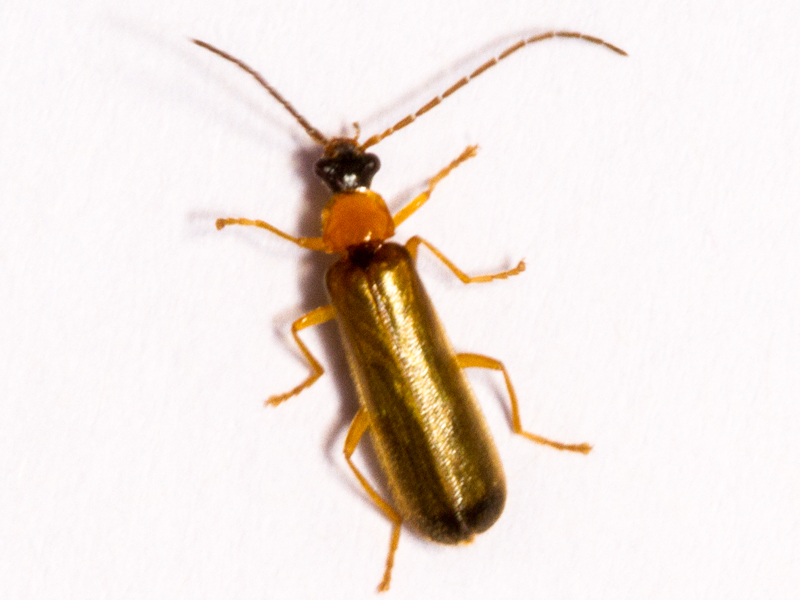
Rhagonycha lutea showing hind tarsal claws, Wendling Beck Project (Norfolk, UK), 5th June 2026