
Oedemera lurida
I often used to encounter smallish sage-green Oedemera that I thought might be this species, only to be put off from the identification by a clear gap between the elytra. The keys seem to suggest that this points to nobilis and I'm now sure that this led me to misidentify this species as nobilis on several occasions. Many other times I left them unidentified, struggling to make sense of how these rather different-looking insects could be nobilis, despite seemingly keying to nobilis. At first I was using Hackston's key which says for lurida (and virescens), "Elytra not narrowing towards the tip or only slightly and evenly so with elytra touching one another almost to the tip." To me that means if there's a gap between the elytra going half way up or more then it's got to be nobilis. Duff allows for "slight gaping" with "Elytra not markedly narrowed apically, the suture not or only slightly gaping" for lurida and virescens vs. "clearly gaping" for nobilis. I find both misleading. Looking through my photos of both species and photos online, there clearly is a difference in the extent of gaping, but to my eyes the gape on lurida is often pretty clear, even if it is never as wide as it usually is on nobilis. Some individuals seem a bit too close to call.
Males are of course easy, but for lurida that does depend on knowing it is a male and the keys don't make it particularly clear how to tell (Duff does show the apical sternite for females but not males). I think I've now worked out that male lurida (and other members of the genus?) have appendages near the tip of the abdomen, though of course you can't see that from above.
There is a difference in the shade of green but although this can be helpful I find it can also be difficult to assess on some individuals (especially in photos). Although experienced coleopterists apparently find separation of lurida from female nobilis easy in the field, it has taken me a while to get to grips with the differences between members of this genus.
This was one of a handful that I identified confidently (well, fairly) as lurida early on.
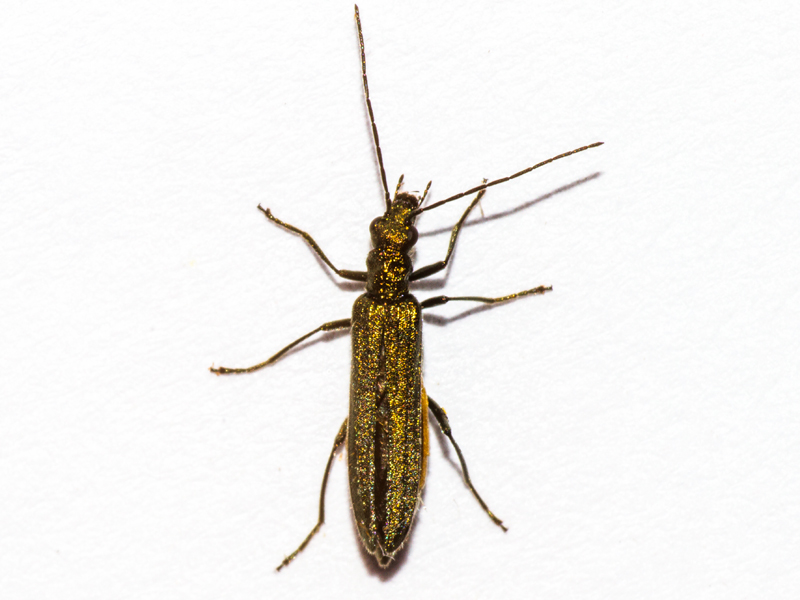
Oedemera lurida, North Elmham Cathedral Meadows (Norfolk, UK), 26th June 2020
This individual has appendages near the tip of the abdomen which I think makes it a male. Assuming I'm right then it has to be lurida despite a fairly obviously gaping gap between the elytra extending well up towards the base.
, Gorgate, 15-May-24 (A) (1).jpg)
, Gorgate, 15-May-24 (A) (2).jpg)
, Gorgate, 15-May-24 (A) (3).jpg)
, Gorgate, 15-May-24 (A) (4).jpg)
male Oedemera lurida, Wendling Beck Project (Norfolk, UK), 15th May 2024
This one had similar appendages on one of the subapical sternites.
, Badger Pit Wood, 26-May-25 (A) (1).jpg)
, Badger Pit Wood, 26-May-25 (A) (2).jpg)
, Badger Pit Wood, 26-May-25 (A) (3).jpg)
male Oedemera lurida, Wendling Beck Project (Norfolk, UK), 26th May 2025
A couple more of my earlier records that I was happy with.
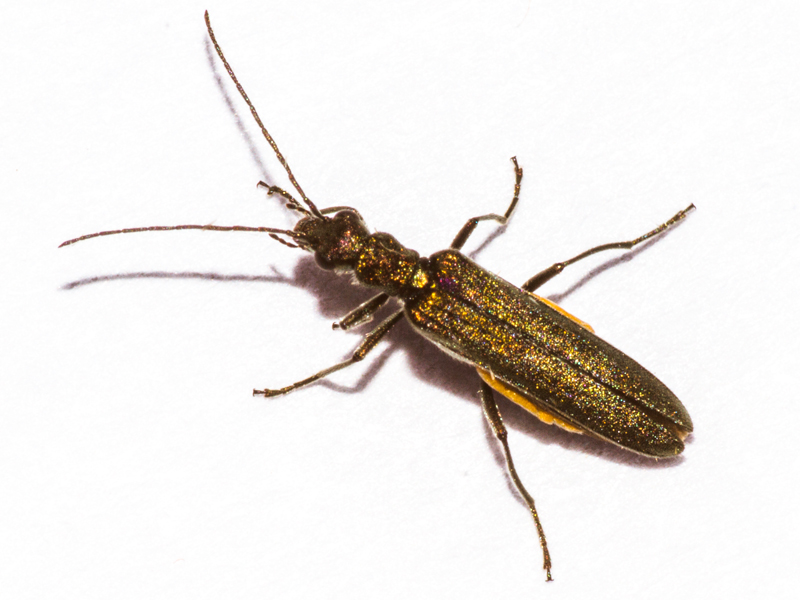
Oedemera lurida, North Elmham Cathedral Meadows (Norfolk, UK), 20th July 2020
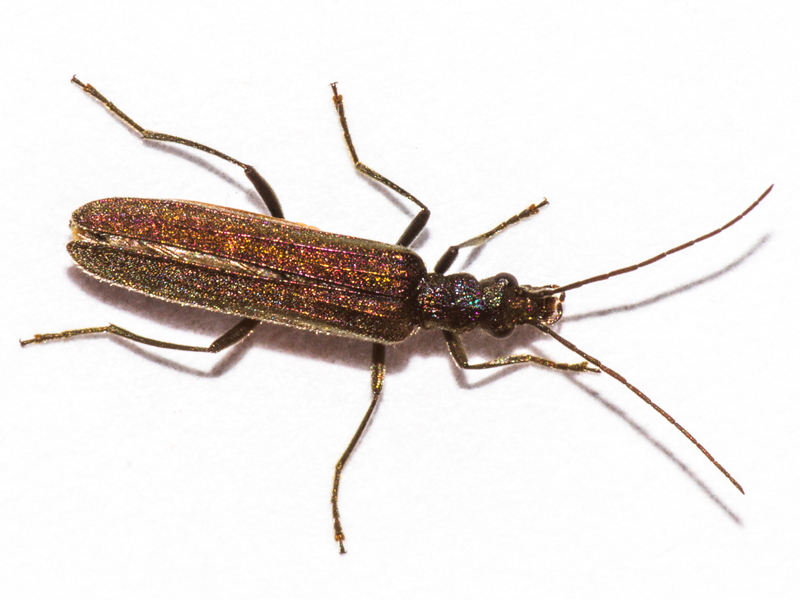
Oedemera lurida, North Elmham Cathedral Meadows (Norfolk, UK), 15th August 2019
I had originally put most of the next few down as nobilis on account of the gap between the elytra but I now think they must be lurida. On some the gap between the elytra was very narrow so they might have passed muster as lurida had I been using Duff at the time, but the elytra weren't touching for most of their length so I had taken that to disqualify them as lurida based on the key I was using. The second photo of the first one below also shows how the gap between the elytra can, of course, appear even wider when the elytra aren't fully closed.
 (1).jpg)
 (2).jpg)
Oedemera lurida, North Elmham Cathedral Meadows (Norfolk, UK), 15th August 2019

Oedemera lurida, St Mary's churchyard, North Elmham (Norfolk, UK), 7th June 2021
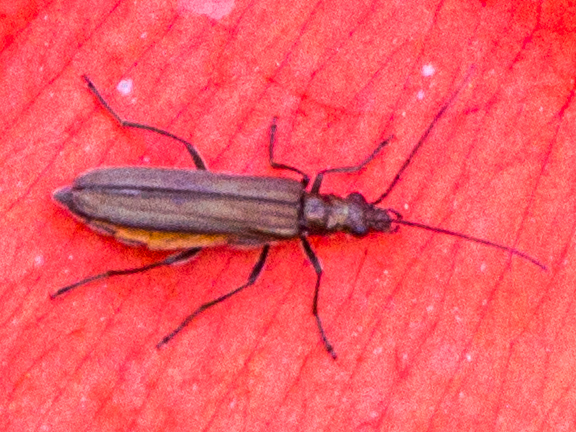
Oedemera lurida, St Mary's churchyard, North Elmham (Norfolk, UK), 25th July 2021
 (1).jpg)
 (2).jpg)
 (3).jpg)
Oedemera lurida, North Elmham Cathedral Meadows (Norfolk, UK), 20th June 2020
In 2025 I examined females of both this species and nobilis and now feel more confident about their identification. The shape of the apical sternite helps eliminate virescens (which is very much less likely in Norfolk) but on the dry specimen I found it really hard to see the shape of the end of it against the apical tergite as it did not contrast at all. In the end I macerated the abdomen and moved the tergite to the side revealing the rounded tip of the sternite. Incidentally, although I haven't checked many female nobilis based on the one I examined recently that species the notched apical tergite that you can see here on lurida (and is shared by virescens). The apical sternite was also more broadly rounded than this lurida and had an obviously transversely striated base.
, Gorgate, 13-Jul-25 (A) (1).jpg)
, Gorgate, 13-Jul-25 (A) (4).jpg)
, Gorgate, 13-Jul-25 (A) (5).jpg)
female Oedemera lurida showing apical sternite (in front of apical tergite first and then with tergite moved to the side), Wendling Beck Project (Norfolk, UK), 13th July 2025
On this one my photo shows the shape of the apical sternite more clearly without moving the tergite away, though the shape of the tergite isn't clear. This specimen showed quite an obvious gap between the elytra though this hadn't been so wide in life.
, Gorgate, 25-Jun-25 (A) (1).jpg)
, Gorgate, 25-Jun-25 (A) (2).jpg)
, Gorgate, 25-Jun-25 (A) (3).jpg)
female Oedemera lurida showing apical sternite (in front of apical tergite first and then with tergite moved to the side), Wendling Beck Project (Norfolk, UK), 25th June 2025
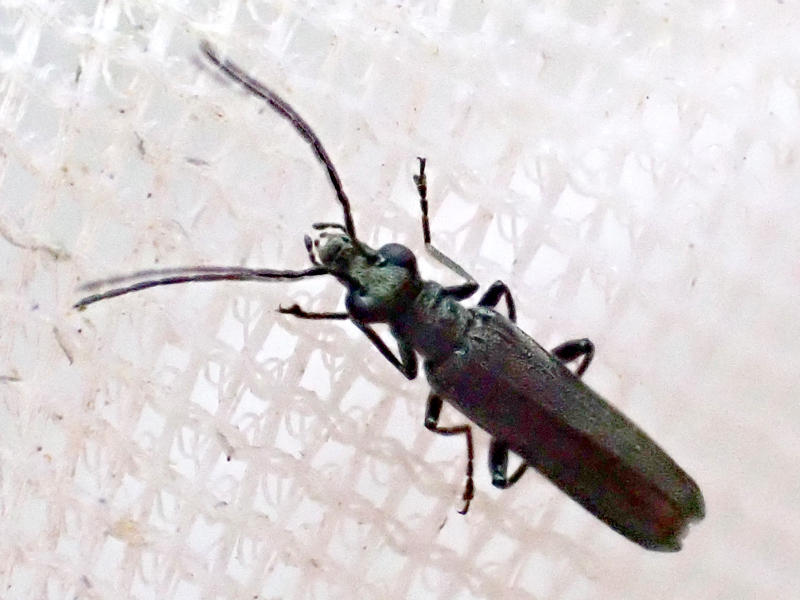
Oedemera lurida, Wendling Beck Project (Norfolk, UK), 9th June 2025
, Hill Farm, 15-Jun-26 (A) (3).jpg)
, Hill Farm, 15-Jun-26 (A) (1).jpg)
, Hill Farm, 15-Jun-26 (A) (2).jpg)
female Oedemera lurida, Wendling Beck Project (Norfolk, UK), 15th June 2026