
Amara bifrons
This beetle came to light. As I keyed it I noted a raised area between the outer depression and the pronotum sides, but this was less distinct than the ridge present on some Amara (e.g. apricaria). I felt it was enough to qualify as a ridge though, and keyed it as such. That led to Amara consularis but it was on the small side for that species and I wasn't convinced. If I took the raised area not to be a ridge it keyed to Amara bifrons, but I wasn't immediately convinced aboout that either. Fortunately I still had possession of Adrian G's beetle collection and he has both consularis and bifrons in there, so I was able to examine and compare his specimens. At first the difference in ridge/no ridge wasn't obvious, but looking harder I could see that in consularis it was consistently steeper on its inner side (i.e. bordering the depression). Mine was like Adrian's bifrons, not like his consularis. Note there was some variation in the shape of the pronotum among Adrian's specimens, in respect of the degree of indent on the side before the hind angle. Generally though this seemed to be at least slightly smaller than on consularis - and can disappear altogether when viewed from directly above rather than obliquely from the side.
 (1).jpg)
 (3).jpg)
 (4).jpg)
 (5).jpg)
Amara bifrons showing hind right corner of pronotum (3 views), North Elmham (Norfolk, UK), 17th July 2024
This also came to light. My greatest challenge when keying it (initially using Duff, but also Hackston) was determining whether or not it had scutellary pores. On one side at least it seemed to have a weak pore at the end of the scutellar stria, which in theory would make it praetermissa. I struggled to find any really convincing reason to discount that possibility, but I wasn't convinced. At roughly 6.2mm long it was at the lower end of that species' size range, but feasible. If I took it to be having no scutellary pores then it keyed to bifrons which also seemed a good fit and the size was comfortably within range. Helpfully, Hackston's key allows for examples of praetermissa that don't have scutellary pores, and this means there are additional criteria to separate it from bifrons. Based on the fact that the pronotum was 2.4mm wide (2.8-3.3mm in praetermissa) and the punctures extended across its base, I think it's safe to eliminate praetermissa in which case everything points to bifrons.
 (1).jpg)
 (6).jpg)
 (2).jpg)
 (5).jpg)
Amara bifrons showing pronotum with close-up of left base and prosternal process, Wendling Beck Project (Norfolk, UK), 23rd June 2026
Prior to finding the one above and during a review of all my Carabidae records, I chucked out my three previous records of Amara bifrons. The species isn't well-recorded in mid Norfolk (in Norfolk it's mostly in the Brecks and elsewhere in west Norfolk, a few records along the north coast and a handful elsewhere, going on the NBN Atlas map) and I didn't have any specimens or good quality photos showing the detail of the pronotum. Two of my earlier records were in 2017 when I didn't have much beetle experience under my belt and looking at the photos one of them at least looks like it was probably misidentified. The third was in 2019 and, in the light of now knowing the species can occur here, I think it may well have been correct, but with only the following photo to go on now I don't intend to submit the record.
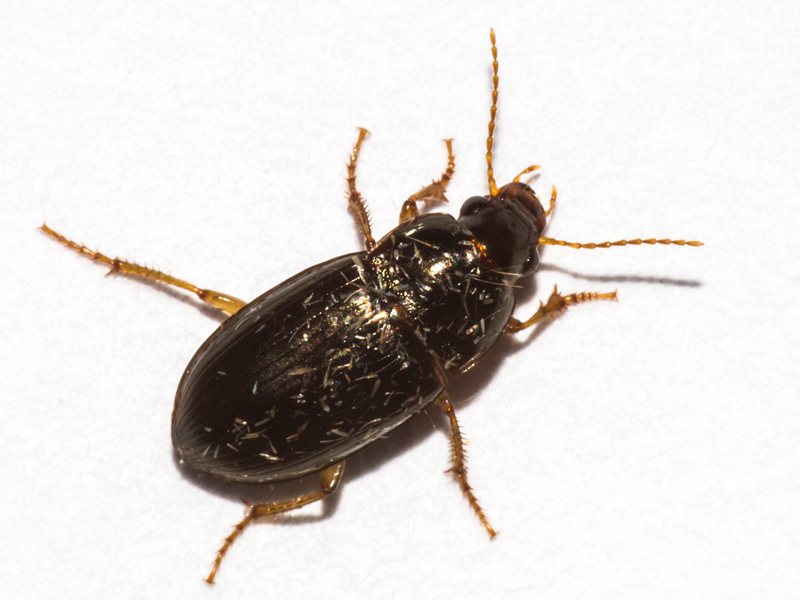
Amara sp., identified at the time as Amara bifrons, North Elmham (Norfolk, UK), 22nd July 2019